
Oh the truck traffic on I-10 – parades of trucks. Are they talking about me? Do they still have CB’s? There are very few horse trainers anymore. They probably turned into truck drivers. Can I say that? Will they hear me? Do they have mobile listening devices? Are they out to get me? How much further is it?
I travel alone. I talk to myself. I haven’t felt good about it until recently. Eating alone, going to museums, performances and concerts alone, streets fairs and tours alone. The thing is, you’re never alone. People are everywhere. You sit next to them, walk next to them, eat next to them, drive next to them. Sleep next to them in thin-walled motels. People are everywhere. Talking all the time. It’s a relief to be apart for a while.
I-10 traffic makes I-25 look like my driveway.
I take lots of breaks. In T or C I had a combo plate at El Faro. In Deming I visited the museum in the old armory building and their beautiful Mimbres pots. In Benson an attentive docent showed off old medical ephemera, rolltop desks, and a collection of railroad and mining stuff. I continued west in a history quest and was richly rewarded in Dragoon Arizona at the Amerind Museum, Art Gallery and Research Center.
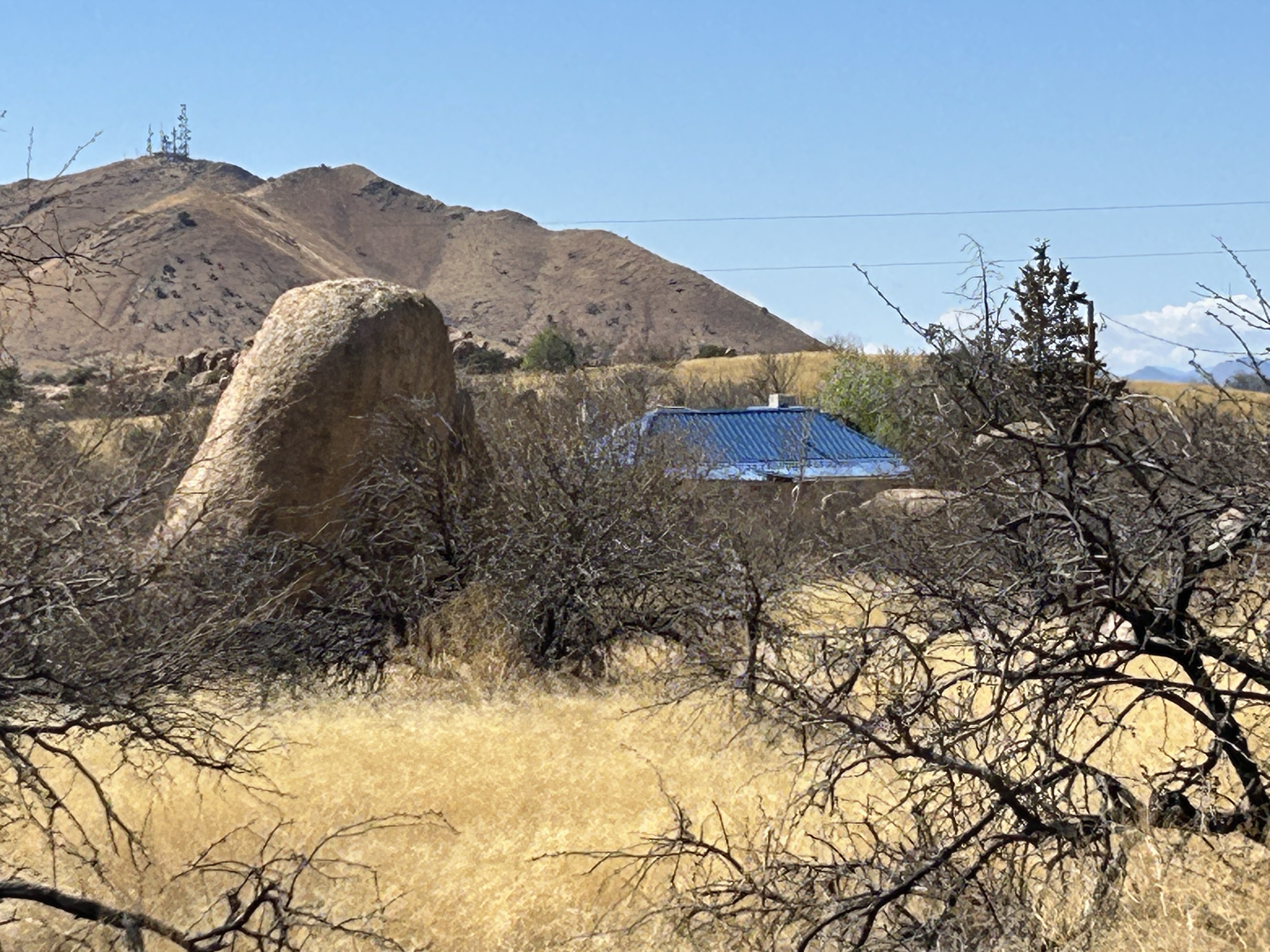
The old ranch established by William Shirley and Rose Hayden Fulton in 1930 was named FF Ranch. William had a passion for Native American artifacts and culture and she had a passion for Quarter Horses. But the horse business part of Amerind stopped when the horsewoman Rose died in 1968.
William Shirley Fulton was a Yale graduate who ran a foundry in Waterbury Connecticut for 25 years before retiring and devoting himself full time to his passion for archaeology. His first explorations of Arizona and New Mexico probably started after his marriage as his father-in-law owned interest in a copper mine in Jerome, Arizona.
The Fultons established the Amerind Foundation in 1937 and opened the extensive collection of artifacts to the public. Permanent collections include a century’s worth of Zuni and Navajo jewelry, and a well curated trove of items from Paquime. There are items with carefully curated text about language and cultural groups from all over the Americas.
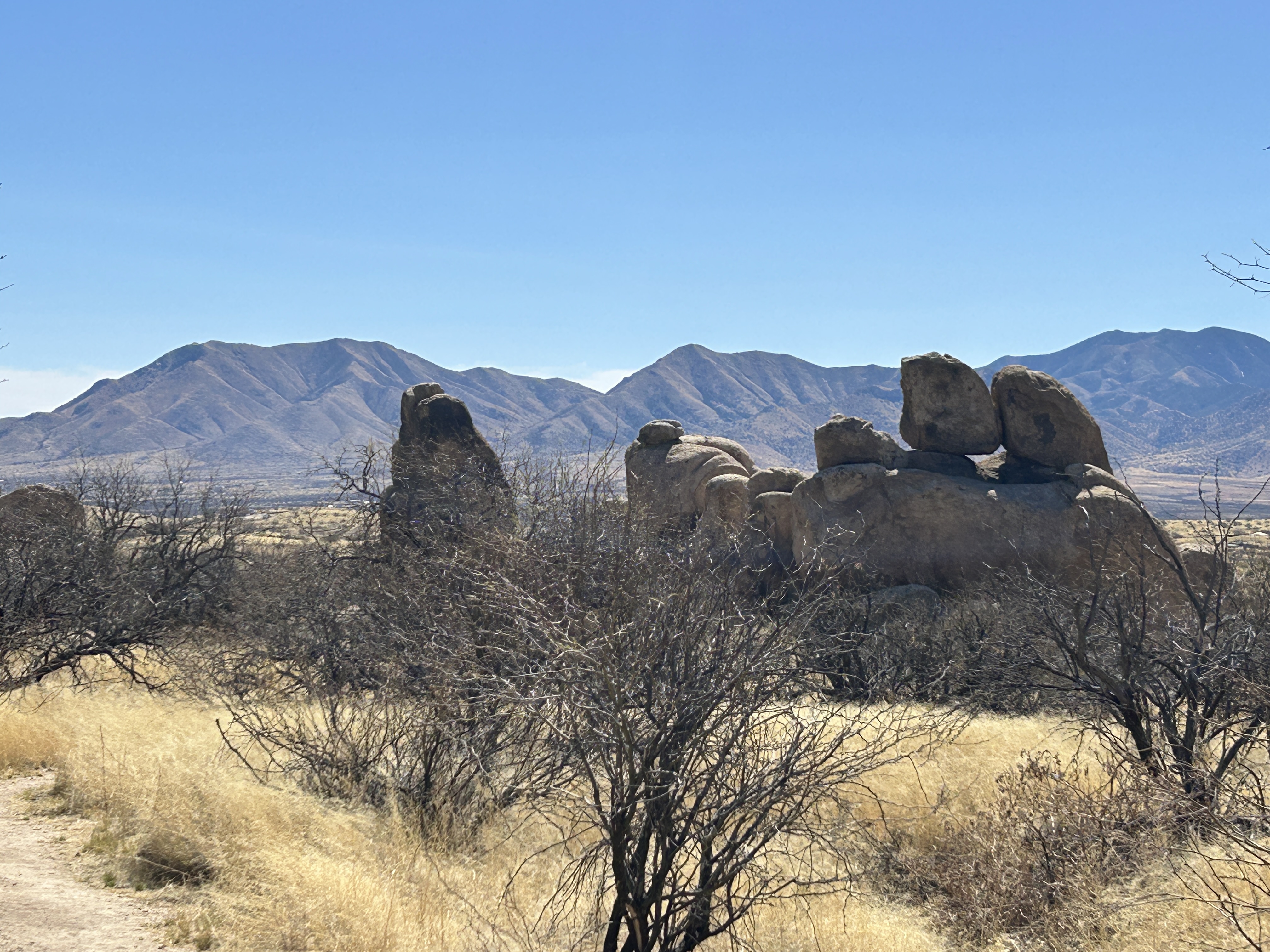
The multilevel building of rose stucco and arches hosts special events. There is a large research library that includes Fulton’s rare book collection. There are also six miles of well maintained scenic trails. I walked through and around the huge boulders before the wind came up. I would have to visit again.
The wind was roaring when I reached Tucson and checked into my beautiful room at the Arizona Inn. It was designed by the same architect the Fultons hired to build Amerind, Merritt Starkweather. He favored the Mission style and dusty rose stucco.
Is this thing on?
The 2025 Tucson Book Festival at the University of Arizona went fast. It was well-organized and full of great speakers. The technical problems that seem to plague most live productions were virtually absent or invisible. It was fabulous, free, and packed. (I am never alone.) I listened to seven sessions in the two days, mostly about politics, and came away informed and inspired, if not uplifted. I also purchased books. Note for next year: budget for the books.
Session titles like The Dangerous Manipulators, Freedom Under Fire, Searching for the Truth, and Reconciling in Trump’s World capture the drift of the presentations I saw. Random notes and ideas I gleaned: You must stand up and out of the box. Just voting isn’t enough. There hasn’t been a President Turley has liked since Madison. The Federalist Society is now the GOP’s “one stop shop” for judges. Free speech laws silence the wrong people. Speech conduct and content are different and should be. Fifty years of not weaponizing the Justice Department has vanished. Just the facts won’t work to convince the right. There are no good billionaires who’ll save us.
There is hope in the local.
I needed to explore the desert to recover.
I toured the Los Morteros Conservation Area in Marana and the Picture Rocks site on Spring Equinox with a guide from the Old Pueblo Archaeology Center. Los Morteros is a Hohokam site featuring mortars in natural rock outcrops used to grind mesquite pods into flour. While we were walking I ordered mesquite flour that I’ve since used to make cookies and pancakes. It’s orangish in color and has a nutty flavor.
The Picture rocks site features a sun spiral with a shaft of light or dagger that points to its center at midday on the Spring equinox. We careened to the site in a caravan of cars and arrived at the Catholic retreat to watch as it happened. Tour attendees were respectful and quiet but for the memorable and not insignificant sound of feet crunching through gravel.

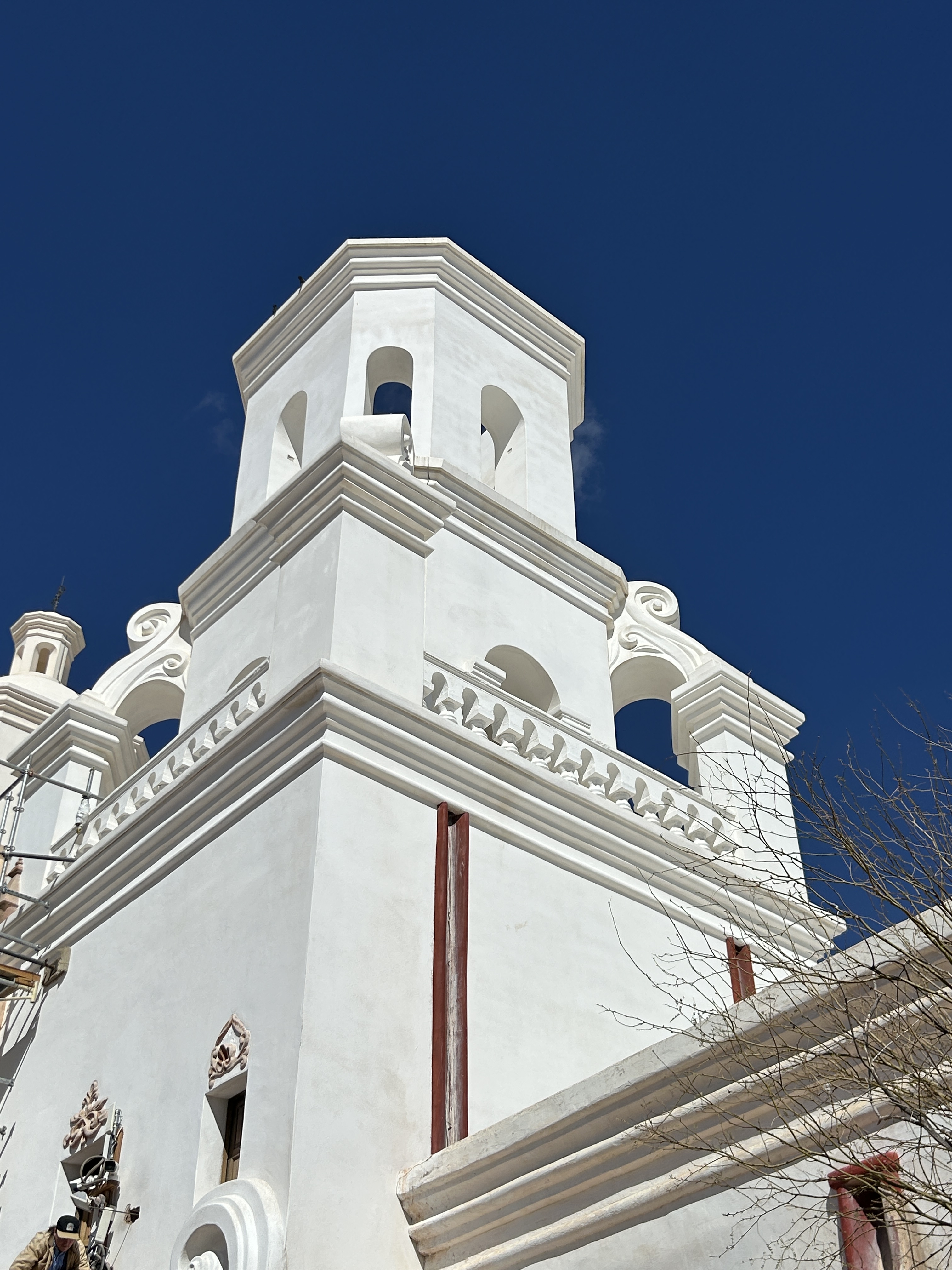
On another tour of the San Xavier del Bac Mission I learned about Father Kino who established it and many others. I found out that it was once a part of the Santa Fe diocese. The Spanish Gothic architecture is unique and unrivaled, even by the California missions. We were told it was once abandoned completely and that people took shelter within its walls, making fires that blackened the wall paintings that took decades to clean and restore.
The Mission Gardens are located at the site of a village and another mission once located at the foot of Sentinel Peak. The site is Tucson’s birthplace and origin of its name, “Cuk Son” meaning something like “Black Base.” Over 4000 years of cultivation has occurred at this location in the Santa Cruz River floodplain. The plots each demonstrate a different era in Tucson’s agricultural heritage, from Native American to Statehood. Heritage chickens roosting in an ancient coop. Quail running around the agave, huge roasting pit like the Hohokam used to process agave. Millstone and threshing ground. Dozens of citrus trees in full fruit. Quince and orange jam grown and jarred there for sale with other things.
At the 49 acre Tohono Chul gardens I watched an outdoor performance of Mozart’s opera, The Secret Gardener, by Arizona Opera. At Centennial Hall on the UA campus I saw the Martha Graham Dance Company perform. I visited the Tucson Botanical Gardens, Tucson Museum of Art and the Fourth Avenue Street Fair. Both days. I took tours of Barrio Viejo and Fort Lowell.
My immersion into Tucson came to a noisy climax downtown in my final nights at the Hotel Congress.The place is full of vintage elements, like old tile and plumbing. It’s bars and stages host renowned performers. I enjoyed jazz and flamenco shows.
Guests are warned it is a loud hotel. You’re asked to sign something acknowledging this when you check in. Somehow I thought it was about the music. At 10:53PM, after the kitchen fell silent, yelling began. I pulled off my headphones. He didn’t seem drunk. He wasn’t slurring his curses at all. The hotel heaved a collective sigh – what an asshole everyone grumbled at once. His shouting continued, reverberating down the halls with perfect clarity. A woman pleaded with him and a little dog barked. At one point someone asked him politely. Dude, we’ve got kids. We’re trying to sleep. He was sneering and mocking the guy. It got quiet soon after that. In the morning someone at the reception desk apologized and said the police took him away. Subsequent nights were much quieter.



 The Albuquerque Conservation Association