

Recent Comments

Medusa Verde –… on Jerry Widdison Rock Hound – C… on Sonoran Falling Adric Menning on Carnuel Cross 
Albuquerque’s Neon P… on The Neon Park and the Garcia… Mesa Verde | The Alb… on Jerry Widdison

As remaining rural agricultural land in the Albuquerque area is swallowed up by growth it is important to know that owners have alternatives. That could be a more innovative development that seeks to protect the character of the property, such as maintaining common land. Others may hope for outright purchase by the city or county for open space or a park. Undeniably, far more often land is sold, divided and developed as conventional subdivisions that build to the maximum density possible without room or sentiment for preserving views, wildlife corridors, trees, or even significant archaeological sites.
Conservation easements are a way landowners may choose to preserve property voluntarily. The owner enters into a legal agreement with a land trust that permanently protects conservation values by limiting future uses. The easement runs with the land in perpetuity.
Aside from the obvious benefits of preservation, owners still own their land and can sell or lease it if they want and may be eligible for significant income, estate, and property tax benefits.
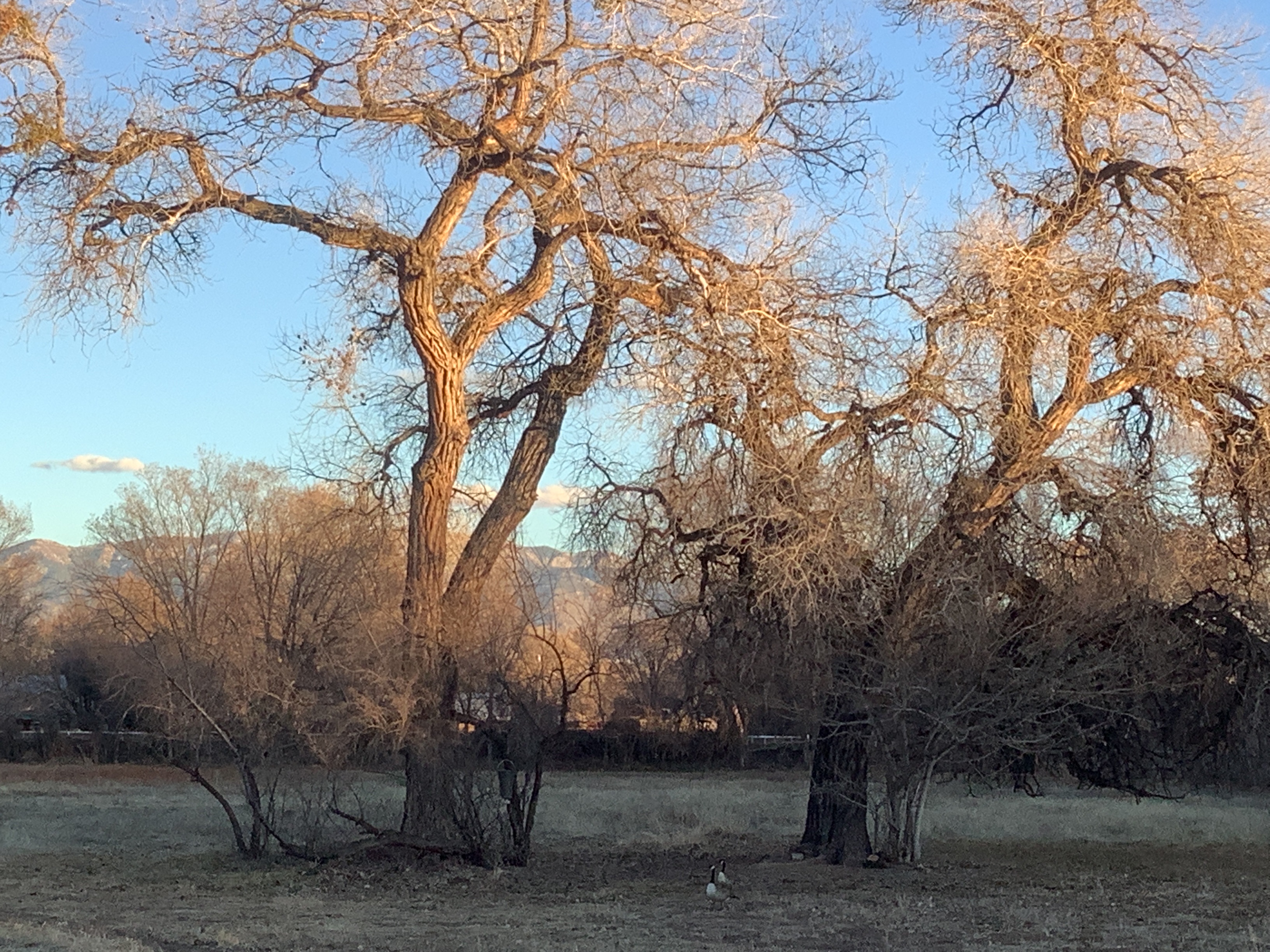
Statewide in New Mexico 17 different land trusts protect nearly 2.5 million acres.
There are at least 8 accredited land trusts working in the Albuquerque area according to the Land Trust Alliance. (landtrustalliance.org) Each has one or more conservation priorities such as forests, wildlife habitat, agricultural land, and archaeological sites.
The Rio Grande Agricultural Land Trust (http://rgalt.org) is active in the Middle Rio Grande Valley. They presently hold 6,269 acres and are working with Bernalillo County on additional easements in the Albuquerque area.
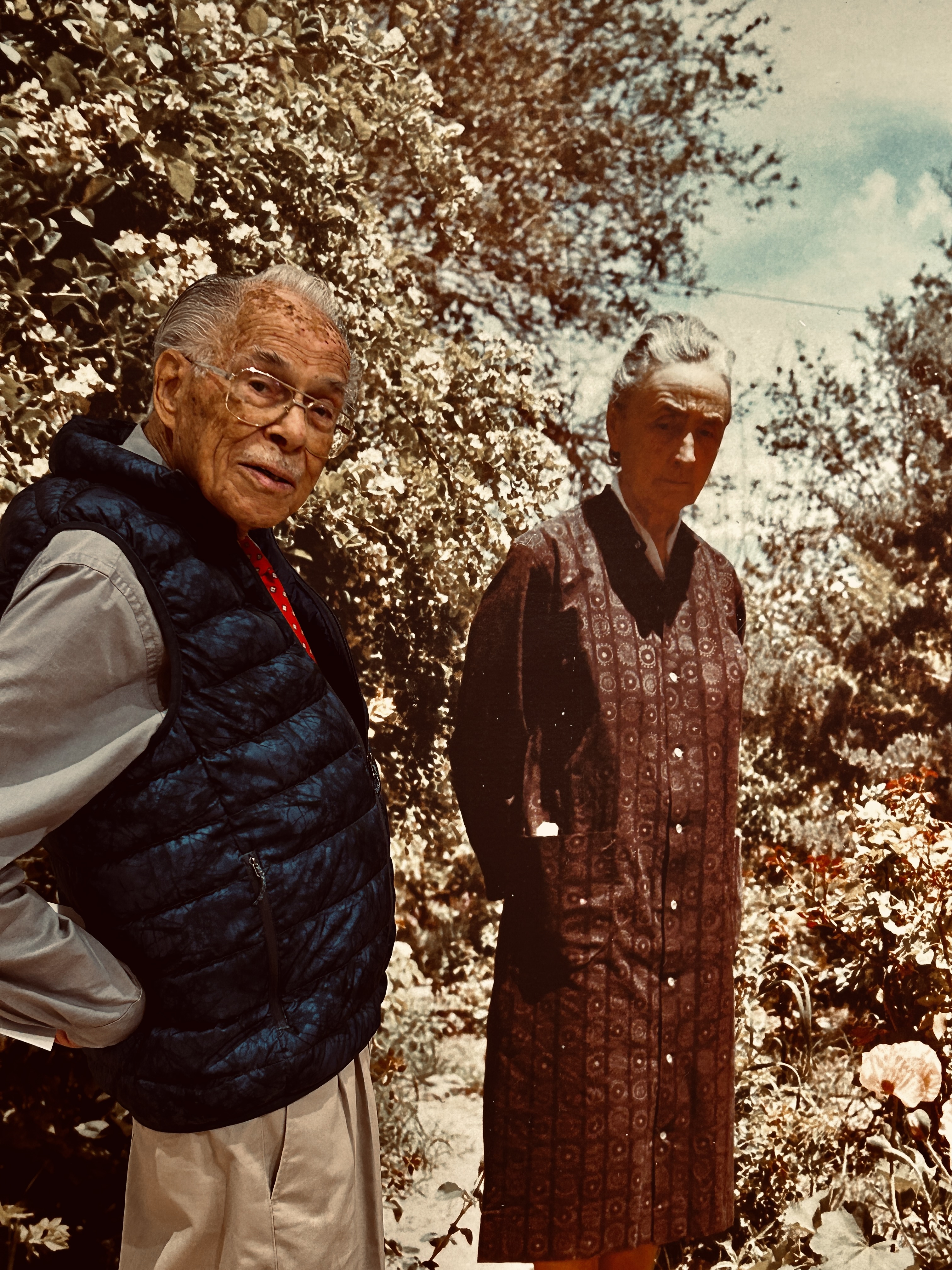
TACA Board member Jerry Widdison in the O’Keeffe and Moore exhibit, at the Albuquerque Museum.
This is a great opportunity to see many of O’Keefe’s well known works and learn about British sculptor Henry Moore. The show pairs the two modernists and details their work, including their recreated studios with some of the found natural objects that inspired them. The exhibit is there until December 2023.
Not everyone was comfortable with the introduction of car culture and gas stations into the American landscape. Conoco and Phillips 66 came up with the idea of making their gas stations look like houses to better blend better into neighborhoods. The stations were built to last. Our station is rapidly approaching its 100th birthday!
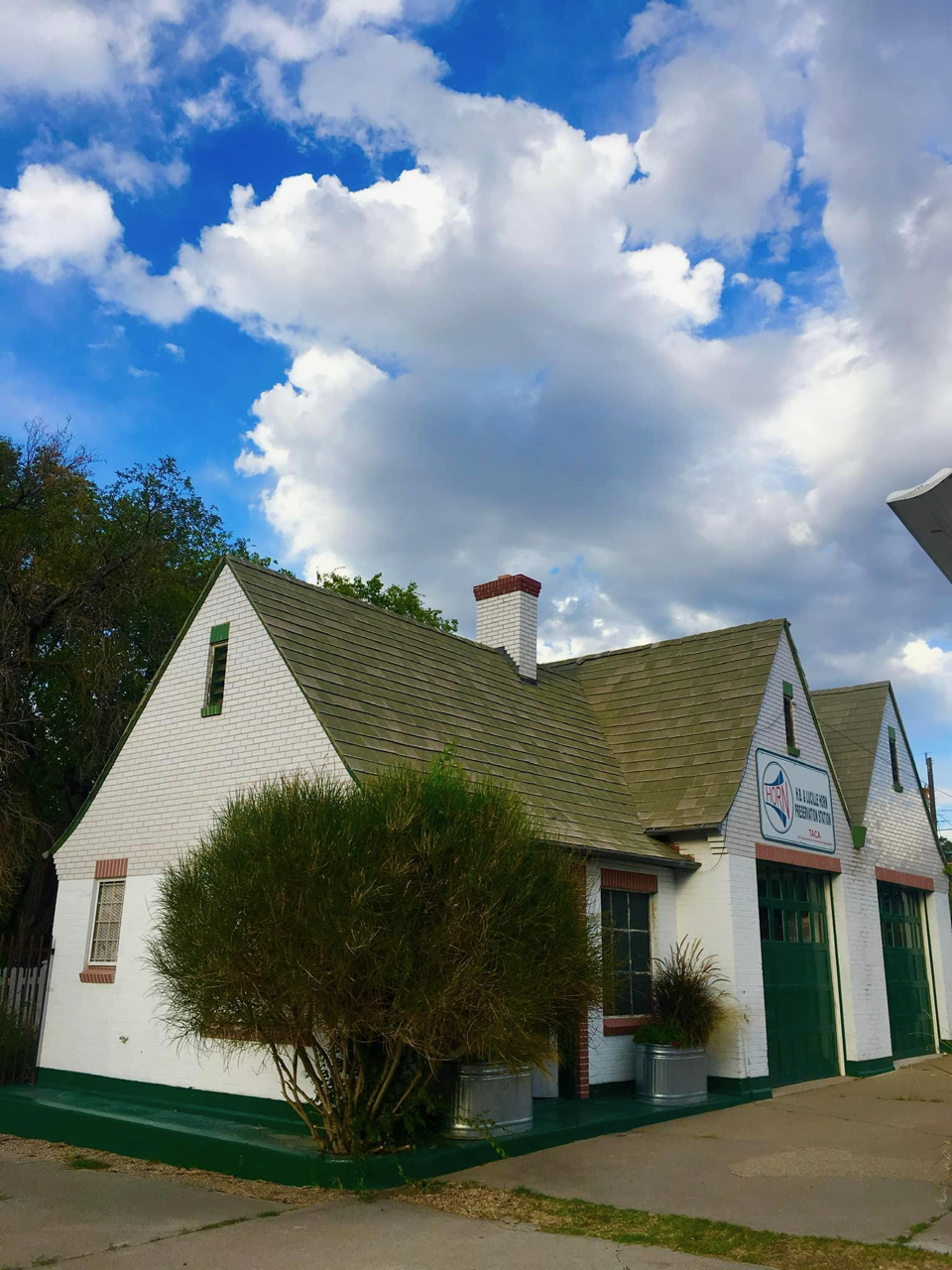
The National Register of Historic Places registration form notes the station is a representation of the “House with Bays” subtype of station popular in the 1930’s.
The front facade facing south onto Coal Avenue presents a bold composition of two steeply pitched gables intersected by an equally steeply pitched side-gabled mass. The building, as originally constructed, contained only one service bay.With additional business, a matching bay was added to the east in c.1939

TACA President, long-time Huning Highlands resident, and historic preservation expert, Ann Carson, had a birthday recently! Happy Birthday Ann!

April meeting at the TACA Station: Anne Carson, Joe Sabatini, Jerry Widdison, and Cindy Carson.
The University of New Mexico’s construction in recent years and VB Price’s commentary, found here were subjects of discussion at the March TACA board meeting. Members generally agree with his points, including how the four projects mentioned fail to honor the campus’s unique sense of place.

Photos from mercmessenger.com
Price notes how three separate documents addressing campus design were apparently ignored, resulting in modernized “anyplace” buildings out of character with the campus’s regional style.
He states that hotelier Jim Long and cultural historian Chris Wilson have called for revitalizing this regional identity through procedures and educational orientation for UNM leadership.
The TACA board supports this effort and looks forward to fruitful discussions in the future.

Photo by Cindy Carson
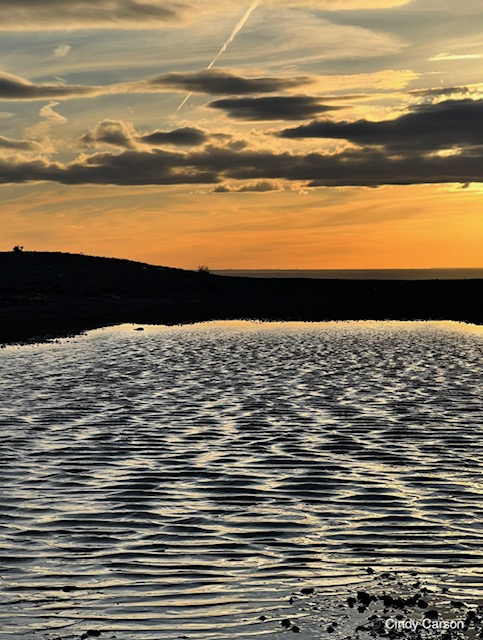
The recent rains and snows seem to be gentle enough to get water to the ground cover, replenish the water table to support springs and get a bit of streamflow to the Rio Grande. Just like it used to work. Joe Sabatini
| Medusa Verde –… on Jerry Widdison |
| Rock Hound – C… on Sonoran Falling |
| Adric Menning on Carnuel Cross | |
| Albuquerque’s Neon P… on The Neon Park and the Garcia… |
 | Mesa Verde | The Alb… on Jerry Widdison |

